
The Restoration of Moulage No. 3887, Vaccine Pustules
Made by Fritz Kolbow, Berlin. Date: before 1940.
Dimensions: 19.9 x 27 x 9 cm.
Materials: wax/wax mixture, cotton, wood, metal, paper, presumably oil paints.
Property of the Institute for the History of Medicine at the University of Bern. Restored at the Moulage Museum Zurich in 2018.
No. 3887: Findings
This wax moulage is crafted in the classical style: The wax body, painted with oil paint, is mounted on a black wooden board and framed with white cloth. A label with the diagnosis is attached underneath. On the back is a triangular metal eyelet for hanging. This moulage is also signed: “F. Kolbow” – for Fritz Kolbow – is painted in white paint on the right below the moulage.
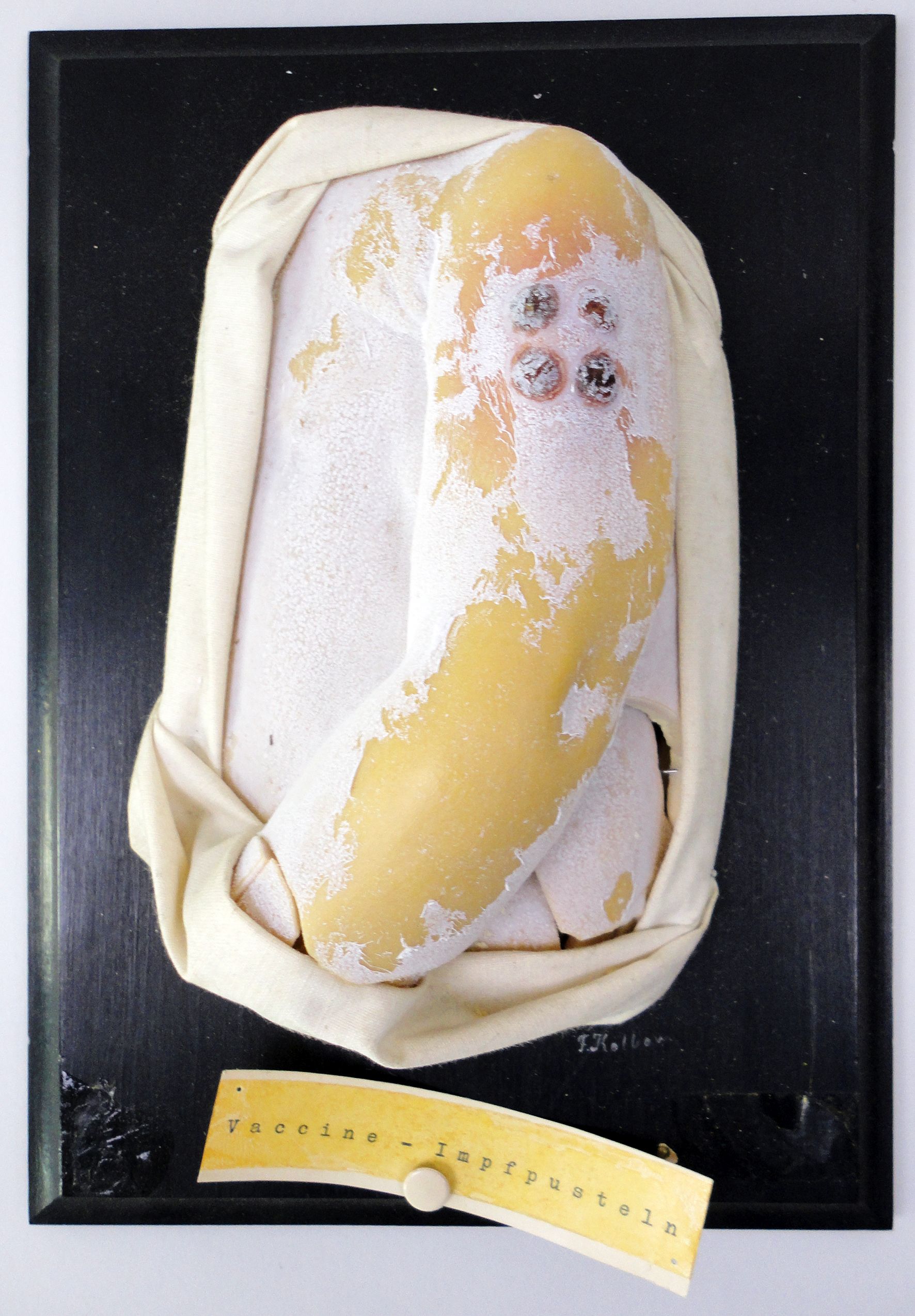
Wax cast 3887, “vaccine pustules,” in its pre-restoration condition.
A preliminary visual examination of wax cast no. 3887 reveals widespread white crystalline efflorescence that almost completely obscures the depicted clinical picture. In several places, the wax has broken, and the fragments have slipped under the textile border.
In addition to these noticeable signs of damage, which leave the moulage in an unstable condition and susceptible to further damage, it also exhibits dust and dirt deposits on the wax, textile, label, and board.
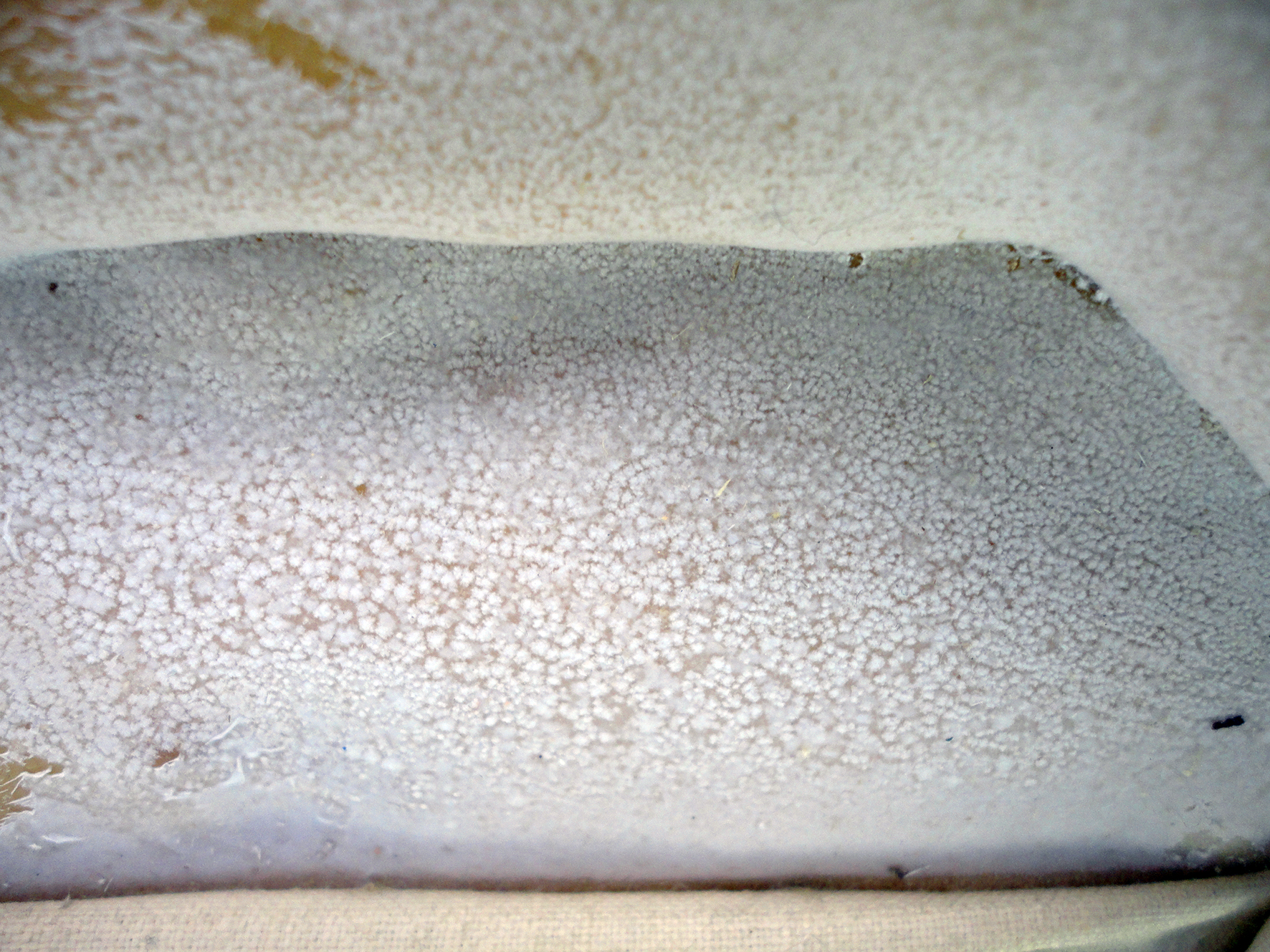
Detail of wax casting 3887, with crystalline efflorescence on the surface.
No. 3887: Restoration
At the start of the restoration work, the object is documented in its entirety in its current condition. Only then does the actual work begin. The restoration of wax models, which are still used today in medical education, aims not only to preserve the physical integrity of the historical object but also to restore the clarity of the clinical presentation.
The loose wax fragments are initially stored separately. During the course of the restoration work, they are joined together using age-resistant adhesives suitable for the material and reattached to the original.
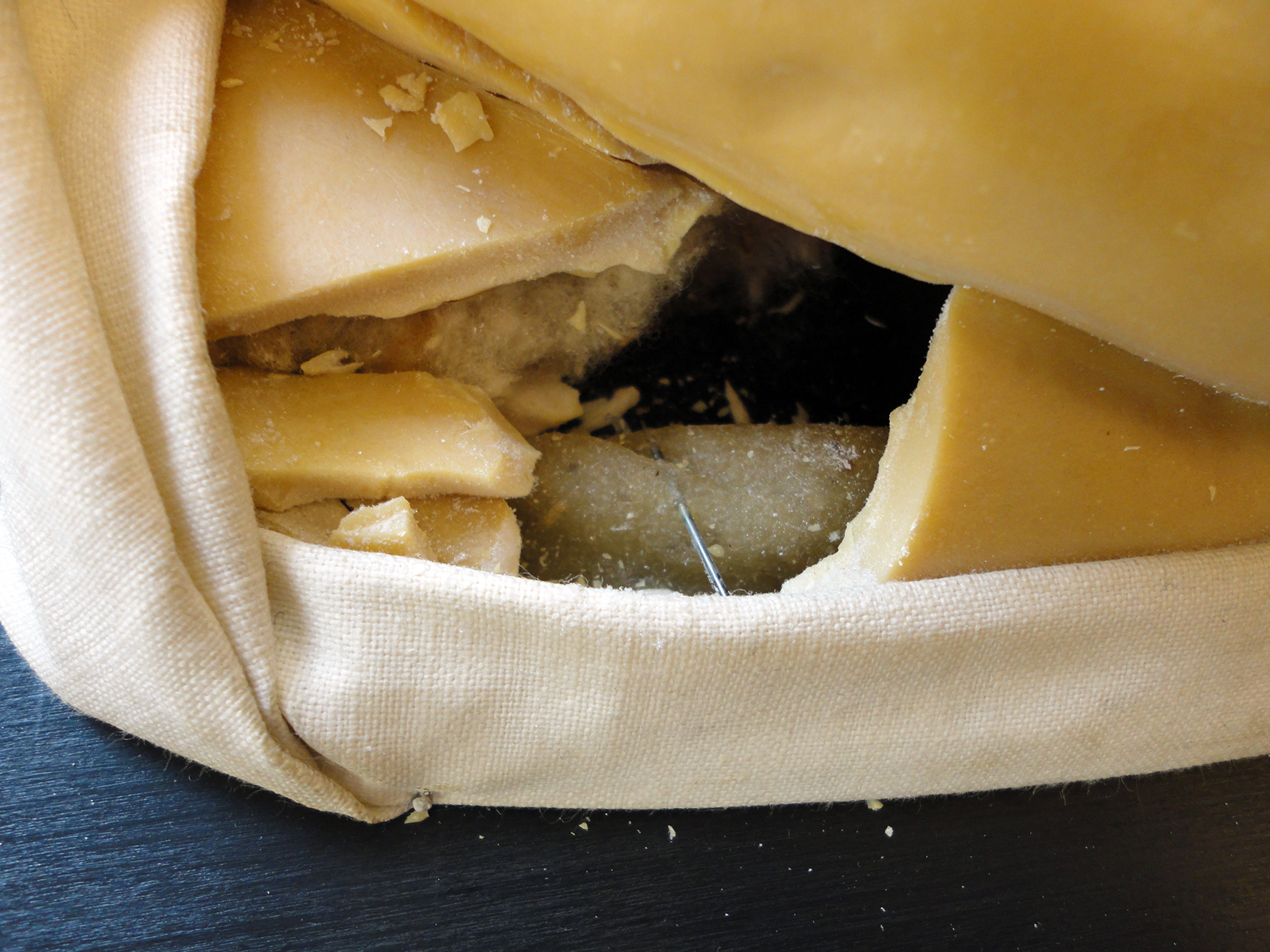
During the restoration work, insightful glimpses into the interior of the moulage also emerge.
To ensure the object’s stability and legibility, however, certain areas must be additionally filled with putty. Depending on the size and location of these areas, they are subsequently retouched.
The fabric borders and labels also often require restoration and must be cleaned, re-draped, or laminated.
Auch die textilen Einfassungen und die Etiketten sind oft restaurierungsbedürftig und müssen gereinigt, neu drapiert oder kaschiert werden.
No. 3887: Use and Storage
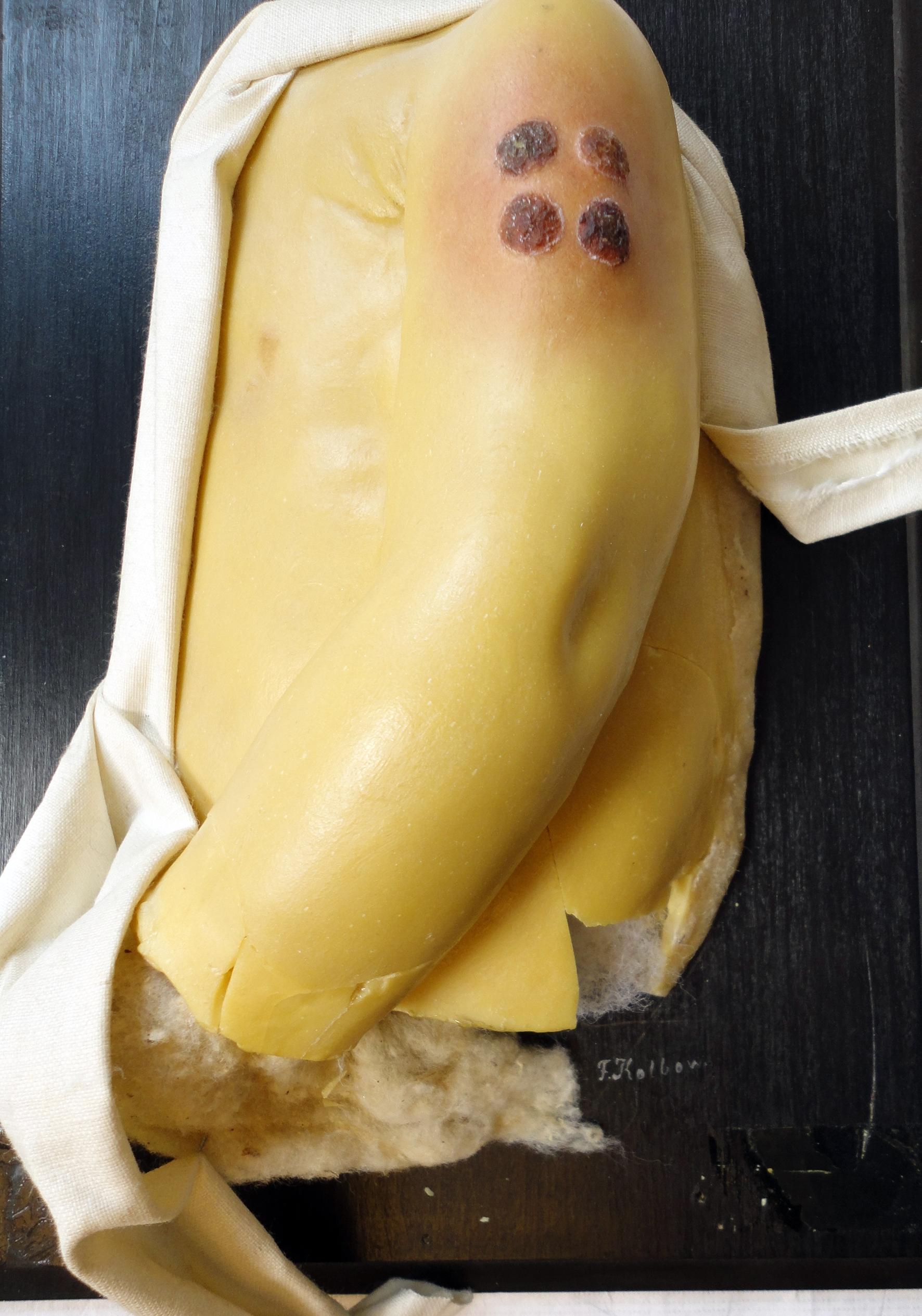
Once restoration is complete, the moulage can be put back on display and, under appropriate protective conditions, used for medical education. The material structure has been stabilized and cleaned, and the smallpox pustules are once again visible.
To ensure this condition lasts as long as possible, adherence to preventive conservation measures is of central importance. For this reason, the humidity in the vicinity of the moulage is monitored just as closely as the room temperature, the type and duration of lighting, and dust accumulation. This applies to both storage and museum facilities. Anyone handling the moulage must always wear gloves, and vibrations—e.g., from transport—are avoided wherever possible.
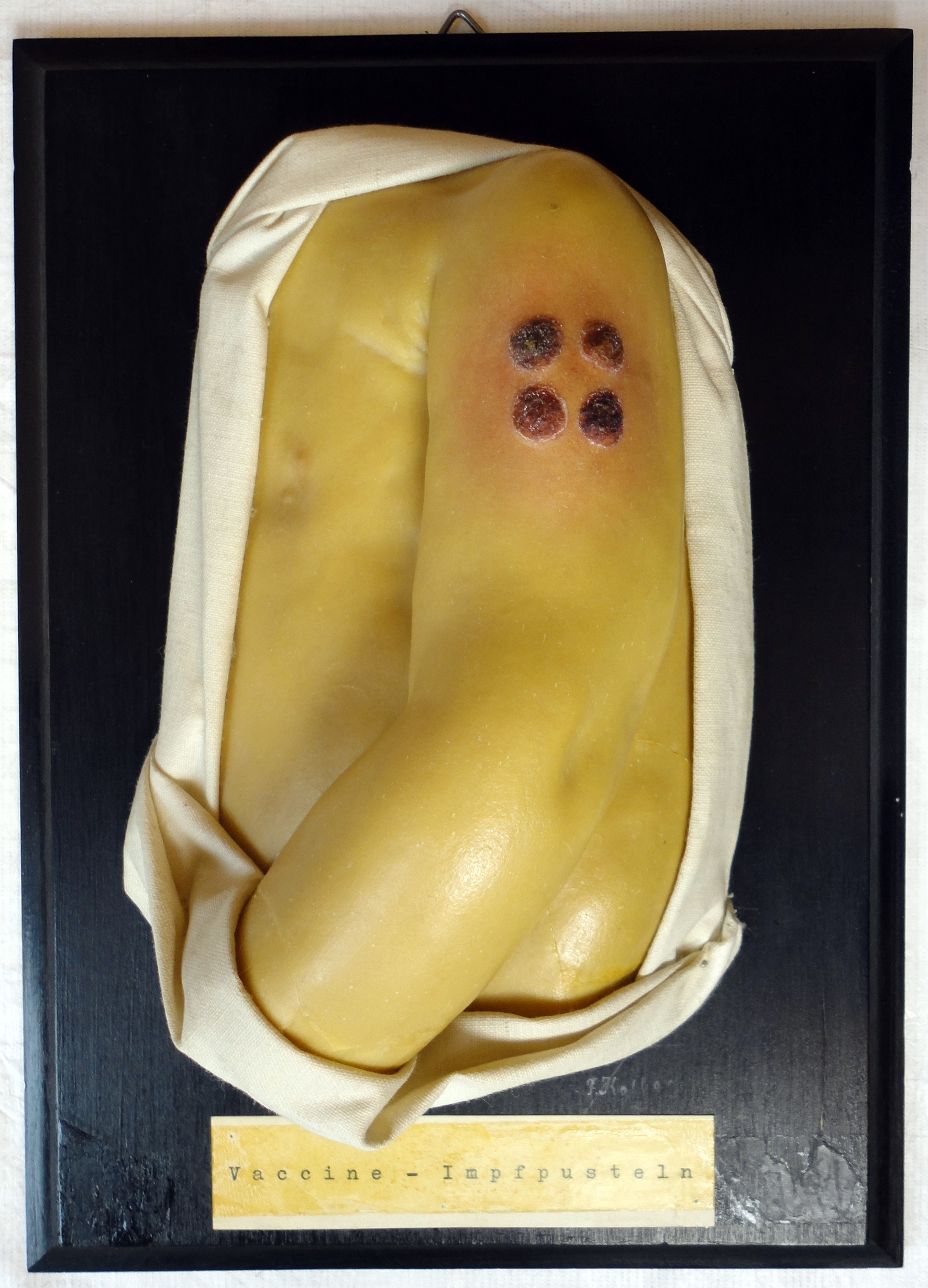
Wax model 3887 after restoration.